



Story by Rebecca West
In a classroom setting, few things can be as unnerving for a child as being asked to stand up and demonstrate their skills or knowledge in front of the entire class – particularly when it comes to reading.
According to the National Assessment Governing Board, the Nation’s Report Card shows continued declines in reading for U.S. students. Considering our current addiction to social media and video shorts, it’s no surprise our attention spans have shrunk, along with our writing/communication skills. Due to this, there’s an entire generation that seems to have given up on punctuation altogether.
(FYI, immersing yourself in long-form text is said to train your attention span away from constant digital distractions.)
All in all, we’re just not reading as much. Which is incredibly sad because the advantages of strong reading skills and being well-read are quite numerous.
As for mental and cognitive health, reading is said to promote stronger brain connections by acting as a workout for your mind, keeping neural pathways sharp, and slowing mental decline in the process. That’s right. Regular reading as we advance in years helps protect memory and lowers the rate of cognitive aging. But what about kids?
The Nationwide Children’s Hospital notes, “Learning to read early builds a strong foundation for language skills, boosts brain development, and increases school confidence. It allows children to expand their vocabulary, practice critical thinking, and enjoy stories at a relaxed, playful pace before formal schooling begins.”
But what happens after children enter the classroom if they haven’t had an early start or they’ve experienced trauma, often leading them to turn inward? That’s where groups like Paws for Youth come in.
Paws for Youth
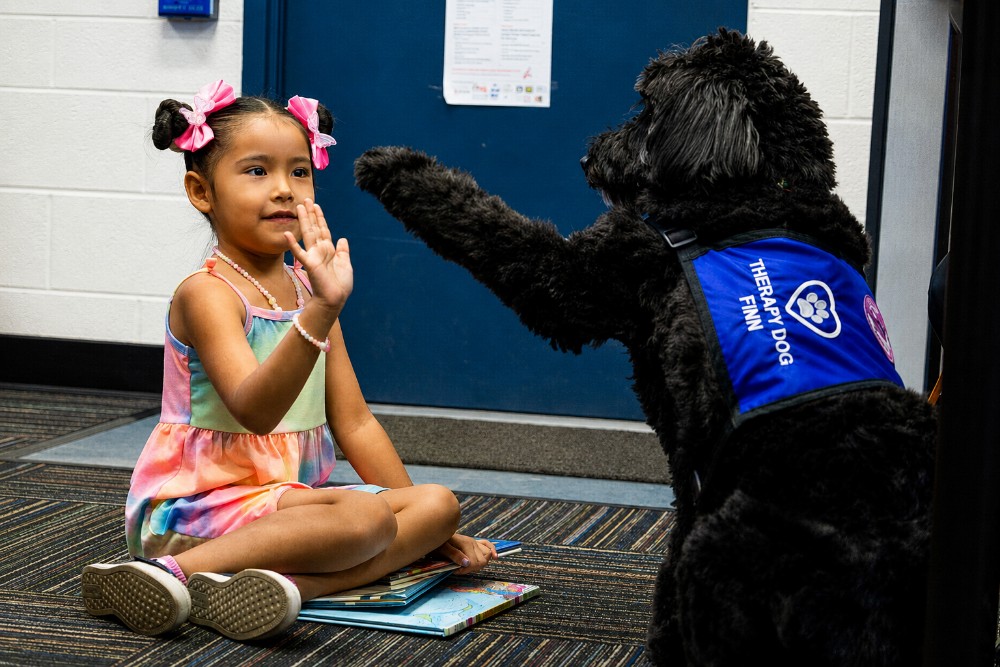
Formerly known as Gabriel’s Angels, Paws for Youth’s ABC (standing for animals, books, and children) reading program is built on the foundation of nurturing youth and their well-being by connecting them with the healing power of pets and compassionate adults throughout Arizona. They do this by giving kids the opportunity to read one-on-one with therapy animals. How does that help? For starters, pets lower stress levels and are nonjudgmental.
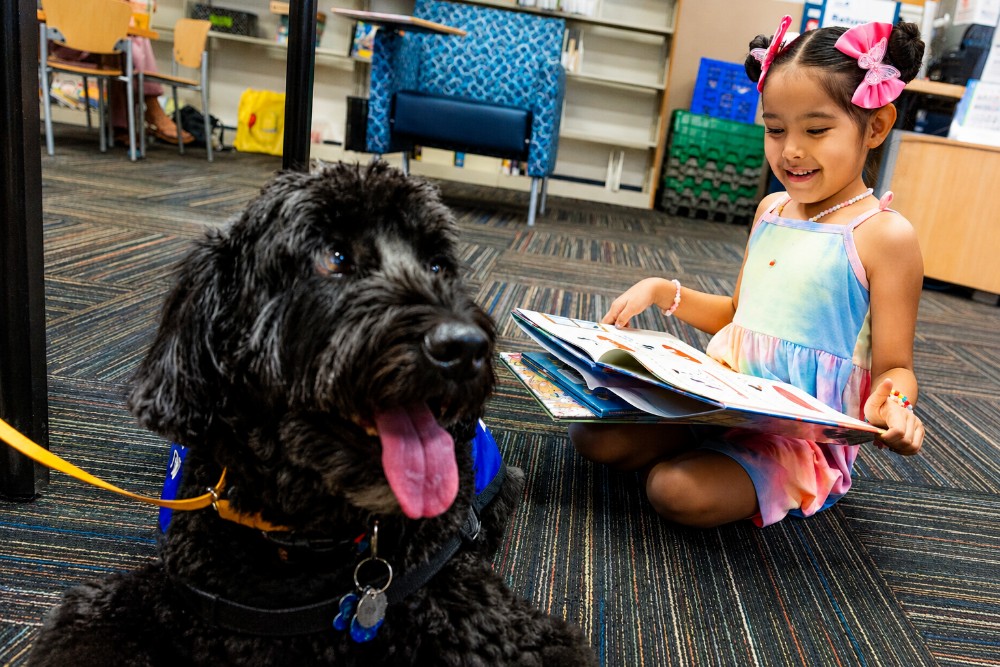
Therapy teams visit the same three kids 12-14 times in a semester for an hour, allowing each child 20 minutes of reading time. This not only builds confidence but also a connection with the same volunteer and therapy dog. The kids, who attend one of the 15 Title 1 schools Paws for Youth works with, look forward to the visits, as they get to sit on blankets and read with cuddly canines.
The children entering the program are selected by the school’s reading specialist, social worker, or school counselor. A whopping 92 percent increase in reading confidence and a 97 percent increase in motivation to read have been reported among those participating.
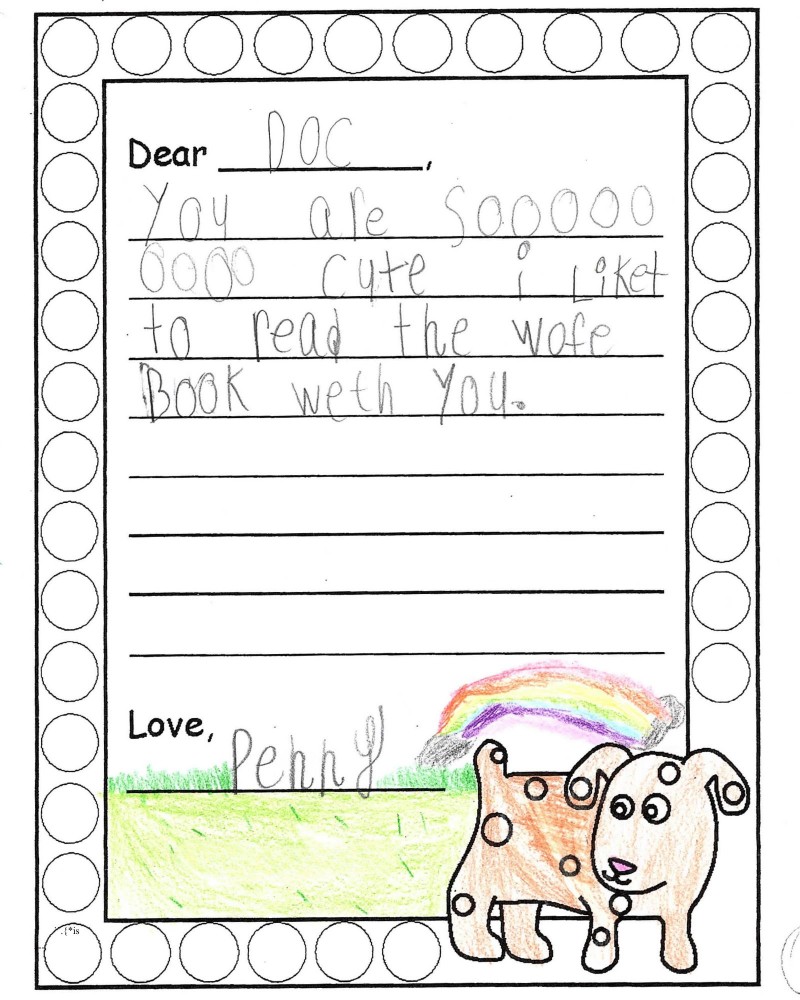
At the end, the kids receive a medal for partaking in the program and write sweet thank-you notes to the dogs as a final goodbye. The program has become so successful that 18 schools are currently waiting statewide for availability.
Therapy Teams
Diane Allison and her therapy dog Doc are one of the volunteer teams. They’ve been with the ABC program since March 2024. She works at two schools and explained that the idea of comfort pet therapy appealed to her. Doc is a cockapoo rescue who is now 10 years old. He was 6 when she and Doc passed their test to get started with the program.
An avid reader with a Bachelor’s in elementary education, the reading program is a great fit for her and Doc, as he gets to focus on one child
At the end of the reading sessions, kids get a sticker, and Doc gets a dog treat, which the kids can give him by placing it in his little hippo bowl or by using a flat hand.
When asked, Allison shared that one of her all-time favorite moments with the program so far was being told by a little boy at one of the schools that Doc was his brother’s “reading guide dog.”
If you’re interested, Paws for Youth could use volunteers in the form of more therapy teams and helping hands for events. You can sign up for one of their once-a-month info sessions on their website, pawsforyouth.org, to learn more.
Read to a Dog
And they aren’t the only group that recognizes the value of a program where kids (and adults) can benefit from reading to a canine (or other pets). If your child doesn’t attend a Title 1 school, the Pima County Public Library system regularly plays host to dogs and residents of all ages through its Read to a Dog, Read to Pet Pals (El Rio Library), and Paws for Grownups programs.
Read to a Dog has been around for more than a decade. It’s designed to give youngsters the chance to read to an audience who won’t judge. A being who contentedly accepts
The library system has received great feedback for this perennial favorite among kids and parents. The dogs and handlers who participate are certified therapy dog teams. Read to a Dog is suitable for preschoolers 3-5 years, kids 6-8 years, and tweens 9-13 years. Increasing a child’s motivation to read is considered an essential element in becoming a successful reader.
Similarly, adults can take a pause from their everyday lives to attend Paws for Grownups, where they can
Reading is Fundamental
Reading to children from an early age can promote a lifelong love of reading. It stimulates the mind and fosters a fondness for learning more about the world around us. That inquisitiveness can serve them well later in life.
Per Psychology Today, “Studies point to early reading for pleasure is linked to enhanced thinking, feeling, and acting. And reading – rather than screen time – is connected to better cognitive, mental health, and behavioral outcomes and offers children a proven way to reduce anxiety and depression.”
If you have pets, encourage your children to read to them. It’s an activity they can do indoors or out, at home or in a park. Anywhere they can have a little privacy or quiet time, even if it’s only 15-20 minutes daily. Someplace where they’re able to relax, let their guard down, and have fun.
For a schedule of upcoming reading dates and branch locations, visit https://pima.bibliocommons.