




Story by Rebecca West
Did you know there are reportedly more than 20,000 to 21,000 identified species of bees in the world, 4,000 of which are native to the United States? And recent estimates suggest the actual total is likely closer to 24,000–26,000!
According to data compiled by organizations like the U.S. Geological Survey, these species are categorized across seven distinct families. To break it down, 90 percent of all bee species are known as solitary bees. These are bees that do not live in hives. Instead, each female builds and stocks her own nest, usually in the ground (roughly 70 percent of wild bees live underground) or even in wood.
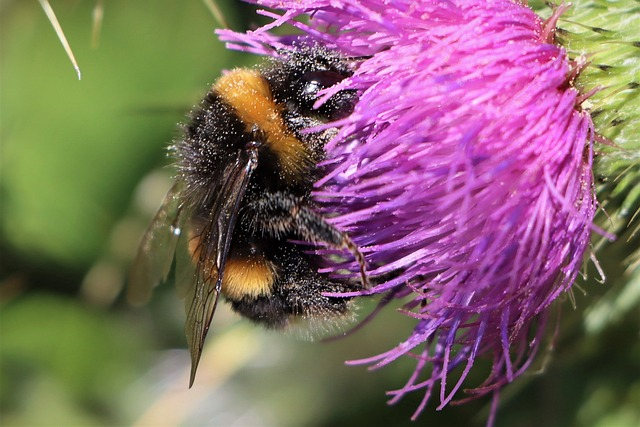
There are 250 species of bumble bees. They are found primarily in the Northern Hemisphere, although they’re also seen in South America. While considered social, these large, fuzzy bees typically live in smaller colonies made up of 50-400 members and practice what’s known as “buzz pollination.”
Then there are stingless bees, of which there are 500-600 species. These stingerless bees (they have no functional stinger) produce honey and tend to live in colonies located in tropical and subtropical regions of the world.
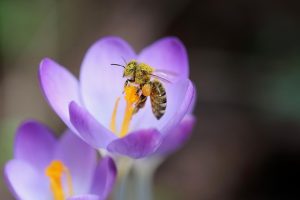
And, of course, there are honey bees, the most famous among social bees, which are comprised of only seven to eight species. They build large wax combs that they fill with honey. While virtually all bee species are pollinators, honey bees and bumble bees are at the top of the list among the eight species most commonly associated with pollination.
Our Relationship with Bees
As depicted in Stone Age art, human use of honey can be seen some 8,000 years ago. The story of ancient beekeeping and the role of bees in early civilizations is fascinating and well worth the read.
Honey, for instance, is one of humanity’s oldest foods and can remain preserved for thousands of years due to a unique combination of low moisture, high sugar concentration, natural acidity, and antimicrobial compounds added by bees themselves, like defensin-1, which comes from their salivary glands.
Ancient Egyptians used honey as a primary ingredient in more than 500 medicinal remedies due to its natural antibacterial properties for healing wounds and burns. It was also prescribed for coughs and sore throats, digestive or stomach complaints, and for preserving tissue—it was even used during the mummification process—among other applications.
People still use it today as an alternative medicine. For more detailed medical insights on bee-derived therapies and byproducts like royal jelly and propolis, you can explore the National Institutes of Health PubMed Central.
Natural First Aid Alternatives for Pets
Honey has also made inroads in veterinary care in recent years, particularly equine medicine. Manuka and Scottish heather honey are two varieties, for example, showing the most promise. Manuka honey comes from New Zealand. It can be used in place of Neosporin in wound care. But honey from Inverness in the Scottish Highlands is considered an even better option.
Research has shown that Highland heather honey is more effective at treating certain infections, including the microbes behind MRSA and three other strains of bacteria. These particular honeys contain methylglyoxal. Because honey is safe for dogs in small quantities, it’s okay to try for managing seasonal allergies. Just be sure to get honey local to your area and one containing the widest variety of pollens, such as wildflower honey.
If you’re curious, bees make honey by gathering and refining sugary secretions from plants (primarily floral nectar) by breaking down complex sugars with special enzymes in their honey stomachs and evaporating any extra water. There’s more to it than that, but that’s it in a nutshell.
Local Bee Populations
Southern Arizona and the Sonoran Desert are said to form one of the richest biodiversity hotspots for native bees on the planet. The region is home to approximately 600 to 1,000+ native bee species out of the state’s more than 1,300. Bees native to Arizona include:
-
Cactus Bees, silvery-gray, fuzzy bees closely specialized in pollinating regional cacti such as cholla, saguaros, and prickly pears.
-
Carpenter Bees, intimidatingly large, shiny-black or metallic bees that employ strong mandibles to excavate nests in dead or rotting wood, agave stalks, and yucca.
-
Cuckoo Bees, Kleptoparasitic bees that lack pollen-carrying hairs (scopa). Opportunists, they lay their eggs inside the nests of other solitary bees.
-
Sonoran Bumblebees, large yellow-and-black fuzzy bees that nest belowground in abandoned rodent dens or old sheds rather than hanging hives.
-
Sweat Bees, small ground-nesting bees seen in various colors—including bright metallic green or blue—that are sometimes attracted to human sweat for its salt.
-
Squash Bees, which feed and pollinate almost exclusively on the pollen and nectar of Cucurbita plants like squash, zucchini, pumpkins, and native gourds.
-
Leafcutter, Resin, and Mason Bees are solitary bees that line their brood cells with tidily cut circular leaf pieces, mud, or plant resins collected from creosote and brittlebush.
-
Long-horned Bees are strong, fuzzy bees recognized by the males’ incredibly long antennae and routinely seen buzzing about sunflowers and asters.
-
Mining Bees, small-to-medium sized solitary or communal ground nesters that burrow into sandy desert soils.
Some key characteristics of southern Arizona native bees that might interest you include the fact that, because they are solitary creatures and lack a communal hive to protect, native bees are actually quite docile and seldom sting unless trapped or squeezed. Another is that many bees here perform buzz pollination (vibrating their flight muscles to shake pollen loose), which is critical for native plants and agricultural crops like squash and peppers.
Conservation Efforts
To aid them, consider choosing desert-adapted vegetation that provides continuous staggered blooms from late winter through fall. Interesting fact: different native bee species have uniquely shaped mouth anatomy and specific pollen needs, so a diverse mix of “cup-shaped, daisy-like, and tubular blossoms” will attract the widest variety of pollinators.
Native plants and wildflowers that attract bees in southern Arizona by season include brittlebush, desert globe mallow, and Parry’s Penstemon; desert willow, blue palo verde, and fairy duster; desert marigold, Gregg’s blue mistflower, and southwestern mock vervain.
There are currently five North American bee types that are in decline. Of those, four are a type of bumble bee. The worst case among them is the rusty patched bumble bee, which has lost between 87 and 97 percent of its range and seen its numbers decline by as much as 95 percent. It is the first bee species in the U.S. to officially land on the Endangered Species list.
It’s alarming when any creature we count on for pollination is struggling to survive. To help stem their decline, explore global bee rescue initiatives or check out