




Story by Rebecca West
Photos provided by Caitlyn Hartman
Deafness in dogs is a condition most of us never think about unless we’ve got an elderly pup experiencing
The highest prevalence in dogs is seen in Dalmatians, with 30 percent born deaf in one or both ears and about 8 percent completely deaf. Many other breeds are affected to some extent, but the rate is much higher in breeds with white, piebald, or merle coats. They include Boston terriers, bull terriers, English setters, and Australian cattle dogs, with the latter having an overall congenital deafness rate of 10 to 15 percent.
The condition is thought to result from degeneration of the cochlear blood supply at age 3 to 4 weeks, presumably resulting from suppression of melanocytes (needed for normal inner ear function) by white, merle, or piebald gene patterns. The mechanism of inheritance is not fully understood for most breeds. (https://www.lsu.edu/
Darla

On the upside, most animals afflicted with it live full and happy lives. We were able to quiz two Tucson dog moms about life with their own hearing-impaired pooches. The first is Darla, a 9-year-old English bulldog and American bulldog mix. Her mom, Brandi, told us Darla was 8 months old and already deaf at the time they adopted her from PACC.
Q. What’s been the biggest challenge of having a deaf dog?
A. Keeping track of her, even at home. We tried using an AirTag on her for a while.
Q. Did you have help training Darla?
A. When we first got her, we tried taking her to puppy training classes, but it wasn’t very helpful. Nobody seemed to know what to do. Ultimately, Darla trained us.
Q. We assume the commands are issued and interpreted predominantly
A. Usually, yes, but she checks in with us regularly and reads body language and facial expressions. We engaged with her a lot from the start, and she has a steady routine that works well for her.
Q. Does she have to be making eye contact for her to respond?
A. Yes. If she’s not facing us, flashing a flashlight on the wall works. When she sees that, she knows to look to us.
Q. How do you approach Darla without startling her?
A. If she’s sleeping or turned away, I give her two light taps on her butt to get her attention. If she’s leashed, I give her two little tugs.
Q. What’s the most frequently asked question you get from people about living with a deaf dog?
A. We get asked how she became deaf and whether we still talk to her like a hearing dog, which we do.
Q. How does she do when interacting with other dogs?
A. She’s okay with them.
Q. What do you think is the biggest misconception about owning a deaf dog in general?
A. People make a bigger deal out of her deafness than it really is.
Q. What would you want people to know about being a pet parent to a deaf dog?
A. It’s great! I would definitely get another dog with a hearing impairment.
Q. Any words of advice for people considering adopting a deaf dog or who have discovered their dog is going deaf?
A. Bonding. You really have to bond with the animal and spend a lot of time together so that you can read each other. @darla.the.deaf.dog
Minnie

We asked Minnie’s mom, Caitlyn, the same questions. This is what she shared.
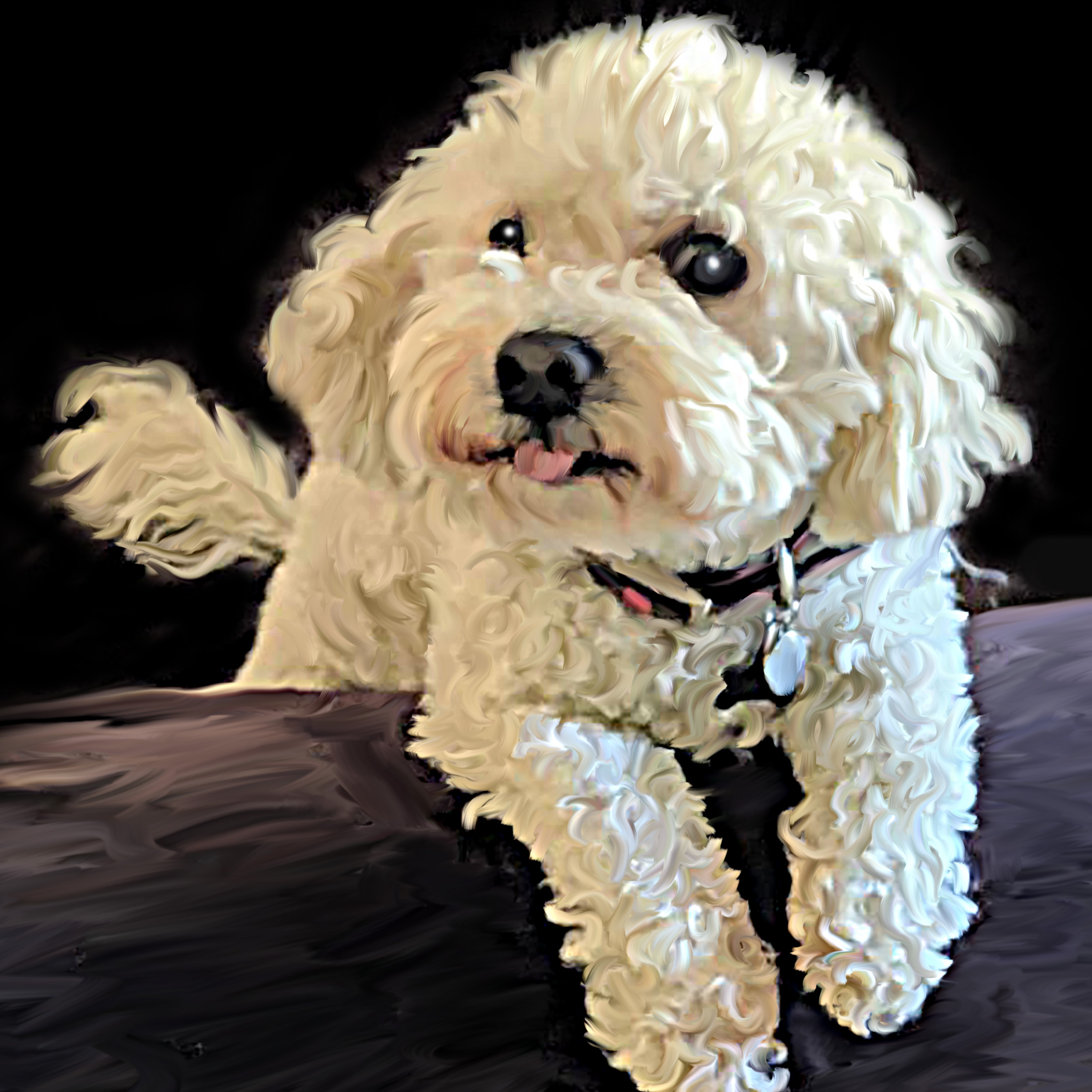
Minnie was born completely deaf, but deafness has never slowed her down. It simply means she experiences the world differently.
I was told Minnie could hear when I brought her home, but I quickly realized something wasn’t right. After having her evaluated, I learned she was completely deaf. It was certainly unexpected, but it never changed my commitment to her. Instead, it motivated me to learn everything I could about training and communicating with a deaf dog. Looking back, I wouldn’t change a thing. Minnie has taught me just as much as I’ve taught her, and she’s become an incredible ambassador for deaf dogs.
The biggest challenge is communication at a distance. You can’t simply call your dog’s name, so training requires more intentional communication and consistency. Safety is also important because she can’t hear traffic, other animals, or someone calling her, so I always prioritize secure environments and reliable visual communication. I trained Minnie myself through research, consistency, and positive reinforcement. Like any dog, she learned through repetition, patience, and rewarding the behaviors I wanted to see.
Yes, Minnie responds primarily to hand signals, body language, and facial expressions. Dogs naturally pay close attention to visual cues, so using consistent hand signals has been very effective.
As far as making eye contact to get a response, not necessarily, but she does need to notice me first. If she isn’t looking at me, I’ll gently get her attention by waving, stomping lightly to create vibrations, or using a vibration collar as a communication tool, not as a correction. Once she sees me, she’s very responsive.
The question I hear most often is, “Can she still be trained?” The answer is absolutely yes. Deaf dogs are just as intelligent and trainable as hearing dogs. They simply learn through visual communication instead of verbal commands.
The biggest misconception is that deaf dogs have a poor quality of life or are difficult to train. Neither is true. They can excel in obedience, sports, and everyday life just like any other dog. Their disability only changes how they communicate, not what they’re capable of.
I avoid surprising her by approaching where she can see me whenever possible. If she’s asleep, I’ll gently create vibrations by tapping the floor or lightly touching her shoulder or side. Building trust and predictable routines has made startle responses very uncommon.
She does very well with other dogs. Dogs communicate primarily through body language, so her deafness doesn’t prevent her from socializing. As with any dog, introductions should be positive and appropriately supervised.
I’d want people to know that a deaf dog is not a “lesser” dog. They deserve the same opportunities, training, and experiences as any other dog. Deafness requires you to adapt your communication, not lower your expectations. If you’re willing to be patient, consistent, and learn how your dog communicates, you’ll discover
National Deaf Dog Awareness Week
Awareness on this topic culminates during the last full week of the month. This year, it will be September 21-27. Here are some helpful resources for readers to provide more information and support on the topic: allanimalsvet.com/