



Story by Heather McShea
Every January 20th, the world pauses to celebrate creatures who dress better than most of us at weddings: It’s National Penguin Day. With their tuxedo plumage, these comedic, charming, flightless creatures may look like they’re dressed for a formal, but beneath the dapper exterior lies a life of grit, underwater finesse, and some very real conservation challenges.
Before we dive (like a penguin at 20 mph) into why these birds’ matter, let’s start with the delightful, the odd, and the downright unbelievable facts that make penguins one of nature’s greatest hits. Here are a few fun (and surprising) Penguin tidbits.
*Commonly asked, are Penguins birds or fish?
The short answer: penguins are birds. More specifically, they belong to the class Aves (birds) and the family Spheniscidae (Penguins, exclusively composed of their 17-19 living species and their extinct relatives.) They have feathers, a beak, and lay eggs, just like other birds.
But, unlike many birds, penguins are built for swimming. Their wings are modified into flippers, excellent for diving. They spend a huge chunk of their lives, up to 75%, in the ocean, coming to land only to breed and molt. Meanwhile, most of us complain about getting into a pool if it’s under 85 degrees.
Underwater, they move with such agility and speed (up to ~15 mph) that they almost seem like fish, but they remain birds.
So yes, penguins are definitely not fish, even if they are masters of the deep.
*Emperor penguins, the giants of the penguin world, can dive over 1,800 feet in search of food. These birds take deep-sea exploration to a new level.
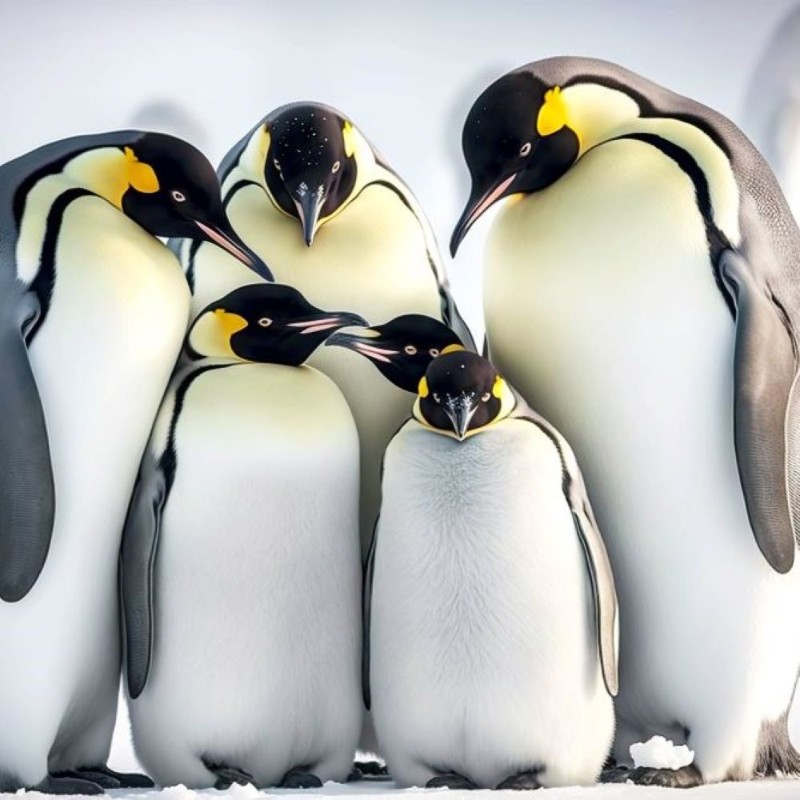
*Their “tuxedo” is camouflage, not couture: When seen from below in the water, their white belly blends with the surface light; from above, their dark backs help them disappear into the deep. Fashion and function.
*Unlike dogs, who shed constantly, penguins molt all at once. They go through a full “catastrophic molt,” dropping all their feathers in a short time. It’s dramatic. And very fluffy.
*Penguins can drink seawater.
Special glands above their eyes filter salt, a very handy trick in a world where the ocean is your kitchen.
*Diet-wise, penguins eat things like krill, squid, and small fish, but they can also get into trouble when those food sources decline due to overfishing.
*Like us, they propose with rocks.
Male penguins often present the perfect pebble to their mate… romantic, efficient, and far more affordable than a diamond ring at the mall.
*They have distinct voices and can recognize their mate’s call in a crowd of thousands.
It’s like trying to find your best friend at Costco before a holiday, but they manage it flawlessly.
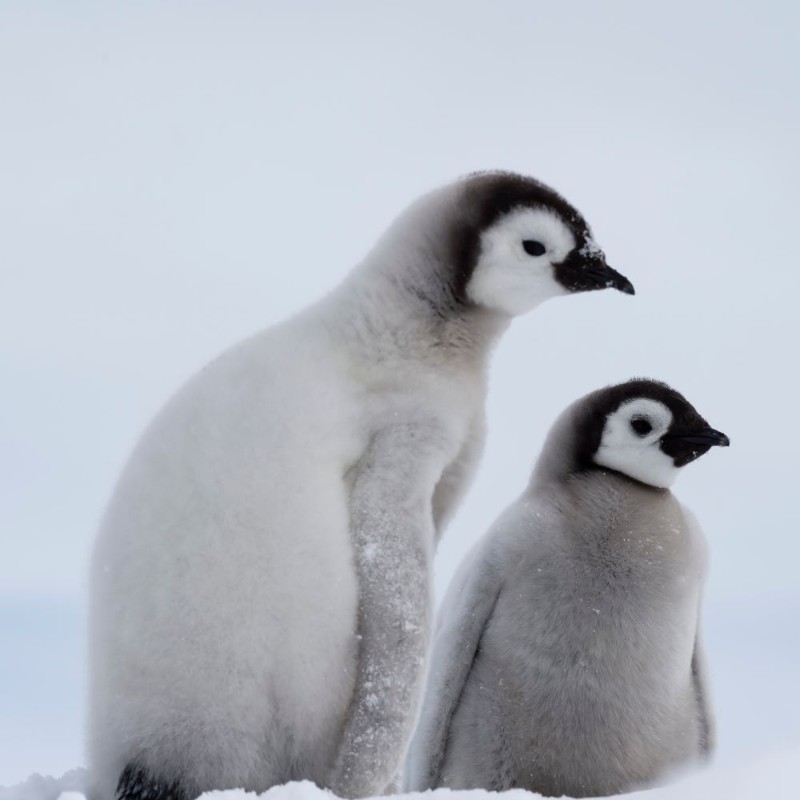
Penguins are more than just adorable belly-sledding daredevils. Many species are facing serious threats. Climate shifts, declining fish populations, human disturbance, and oil spills place many species at risk. The good news? Around the world, a handful of dedicated organizations work tirelessly to keep penguin populations stable, healthy, and wild.
Here are a few major rescue and conservation programs worth knowing:
1. SANCCOB – South African Penguin Rescue
The Southern African Foundation for the Conservation of Coastal Birds has rescued and rehabilitated tens of thousands of penguins from oil spills, starvation, and habitat loss since 1968. Their work includes chick rearing, medical care, and emergency response.
2. Mystic Aquarium – U.S. Penguin Breeding Programs
Mystic Aquarium in Connecticut participates in the Species Survival Plan for African penguins, maintaining healthy genetic diversity and helping support worldwide rescue partners.
3. Los Pingüinos Natural Monument – Chile
This protected island sanctuary maintains strict no-fishing buffers and habitat protection for Magellanic penguins, helping stabilize populations even as pressures increase along other parts of the Chilean coast.
On the more concerning side: Humboldt penguins, which live along the coasts of Chile and Peru, are under severe threat. According to recent reports, their numbers have dropped drastically. Threats include marine pollution, disturbances to nesting sites from human activity, and disease (including avian flu), especially in the context of climate anomalies like El Niño.
A Desert Magazine… Talking About Penguins? Yes, absolutely. Even though we don’t have penguins waddling around Arizona, caring for their future is part of a global conservation ethic. By raising awareness (like National Penguin Day), we shine a light on species far from our backyard but connected in the broader circle of life.
The rescue stories, from oiled birds to breeding programs, are powerful examples of how people can make a difference and remind us that individual actions (donating, adopting symbolic eggs, supporting conservation orgs) do add up.
Penguins are proof that animals don’t have to share our climate to share our hearts. And honestly: who doesn’t want to spend a few minutes thinking about the world’s most charming little birds – the ones who can’t fly, won’t stop swimming, and always look ready for a black-tie event.